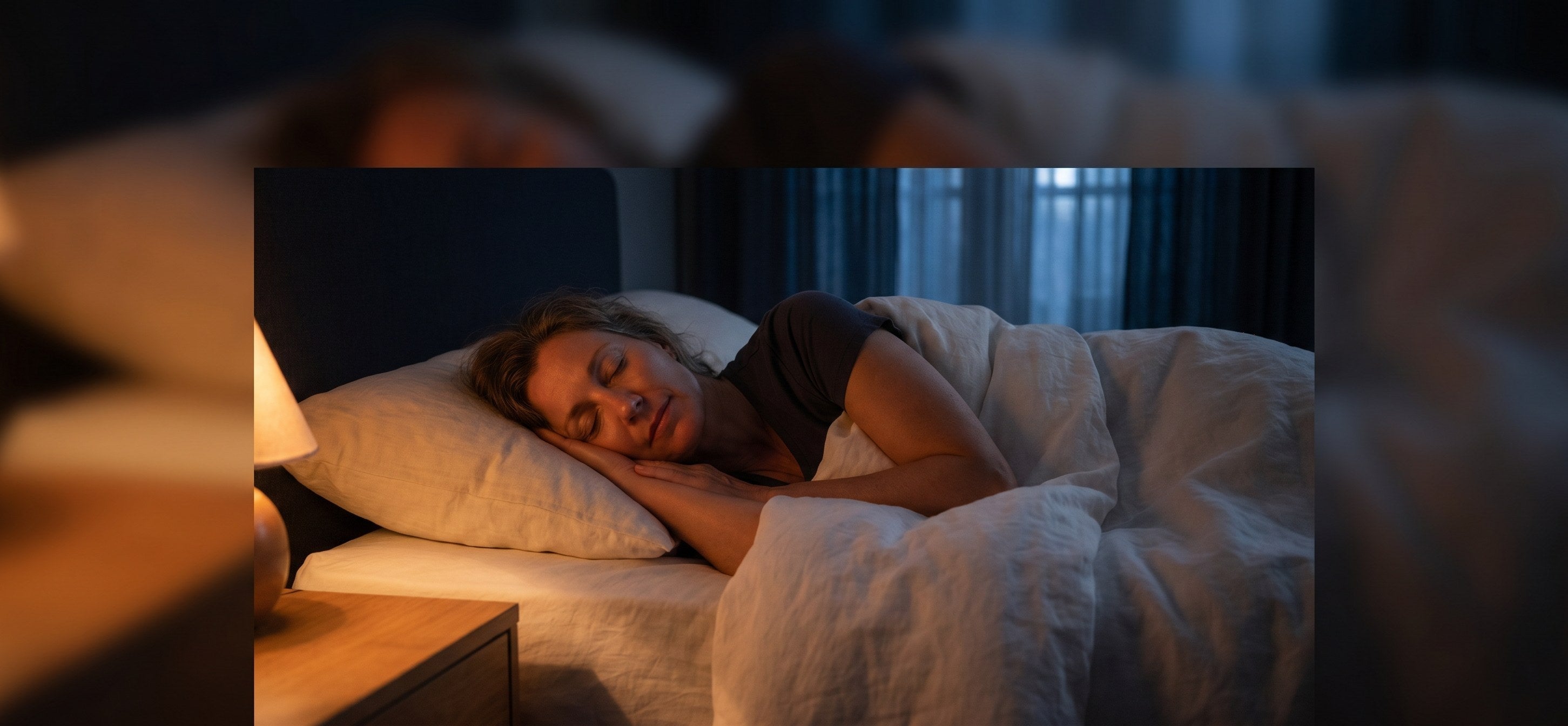
How to Sleep Better at Night: 7 Gentle Shortcuts That Actually Work
Body Align Wellness Team • Scientifically Reviewed • Updated May 8, 2026 • 9 min read
What it really takes to sleep better at night
Better sleep isn't about willpower or perfect bedtimes. It's about removing the small things quietly working against your body and giving your nervous system a soft signal that it's safe to let go. Below are 7 gentle, science-backed shortcuts that target the real reasons most of us aren't sleeping well, plus a simple drug-free way to settle into deeper, more restful sleep night after night.
If sleep has been giving you trouble lately, you're not alone.
Most of us are lying there at 11pm with a tired body and a mind that just won't stop. Or up at 3am running tomorrow's to-do list at full volume. Or technically asleep for eight hours and still waking up like we ran a marathon.
Here's the good news.
Better sleep is rarely about doing more. It's about removing the few small things quietly working against you, then giving your body a soft signal that it's safe to let go.
No pills. No 4am cold plunges. No giving up coffee forever. No fancy sleep tracker telling you what you already feel.
Just seven gentle shortcuts that work on the actual reasons most of us aren't sleeping well.
Try one this week and see how your sleep feels.
📋 In This Article
- Anchor your wake-up time before your bedtime
- Get morning light on your face
- Cut the late caffeine
- Cool the bedroom down to the sleep zone
- Get screens out of the bed
- Put your worries on paper before they keep you up
- Try sleep patches before another sleepless night
- Real Results from Real People
- Sleep Patches vs. The Other Stuff
- Frequently Asked Questions
What's actually getting in the way of your sleep
There's a reason "just go to bed earlier" never worked.
Sleep isn't a switch you flip at 10pm. It's a slow, layered handoff your nervous system makes when it feels safe, dim, cool, and quiet. When any of those signals get crossed, your body stays half-awake all night, even if your eyes are closed.
The shortcuts below each fix one of those signals. You don't need all seven. Pick the ones that sound most like your situation and start there.
1️⃣ Anchor your wake-up time before your bedtime
Most sleep advice tells you to fix your bedtime first. Try the opposite.
Your body uses your wake-up time as the anchor for the whole rhythm. Pick a wake time you can hold seven days a week (even weekends, within an hour) and your body will start steering you toward bed at roughly the right hour on its own.
Trying to force yourself to sleep at 10pm when you've been waking up at 9am is like trying to feel hungry on a brand new schedule. Your body needs an anchor it trusts.
The first week feels rough. By week two, most people feel sleepy at a consistent hour for the first time in years.
2️⃣ Get morning light on your face
This one sounds too simple to matter. It matters a lot.
Bright natural light hitting your eyes within the first hour of waking is the strongest signal your body has for setting your sleep clock. It tells your brain "this is morning," and roughly 14 to 16 hours later, your body starts releasing melatonin on schedule.
Skip morning light and your body genuinely doesn't know when night is.
You don't need a sunrise hike. Five to ten minutes outside, no sunglasses, ideally before 10am. Coffee on the porch counts. A short walk counts. Standing in your backyard counts.
If you live somewhere gray, a 10,000 lux light therapy lamp on while you eat breakfast does the same job.

3️⃣ Cut the late caffeine (you're keeping more in your system than you think)
If you have a coffee at 2pm, about a quarter of it is still active in your bloodstream at 10pm. That last cup is quietly blocking the chemistry your brain needs to wind down.
A lot of people swear caffeine doesn't affect them. It probably affects their sleep depth even when it doesn't keep them awake. You can fall asleep just fine and still spend the whole night in shallow, fragmented sleep.
The fix isn't quitting coffee. It's just shifting the cutoff.
Try a hard stop at noon for one week. Most people notice deeper sleep within three to four nights, even if their bedtime doesn't change at all.
If you really love an afternoon ritual, switch to decaf or herbal tea after lunch.
4️⃣ Cool the bedroom down to the "sleep zone"
Your core body temperature has to drop about one to two degrees for deep sleep to happen. If your bedroom is warm, that drop never quite lands and your body fights for it all night.
Most sleep researchers land on 65 to 68°F (18 to 20°C) as the sweet spot. That feels colder than most of us keep our houses, especially in winter.
You can bridge the gap with bedding instead of running the AC harder. Light, breathable sheets. A fan moving air across your skin. A warm bath or shower 90 minutes before bed (the post-bath cool-down is what actually triggers the temperature drop, not the warmth).
If you wake up sweating, the room is too warm or your bedding is too heavy. Adjust one variable at a time.
5️⃣ Get screens out of the bed
Phones in bed are the single most common reason a tired person can't fall asleep.
It's not just the blue light (although that doesn't help). It's that your phone is engineered to keep you alert. One scroll, one notification, one "quick check" of email and your nervous system is back in problem-solving mode. The opposite of where you need it for sleep.
The fix that works for most people: charge your phone in another room. Get a $10 alarm clock. Put a book or a Kindle on your nightstand instead.
If that's a bridge too far, set the phone to grayscale after 9pm and turn on Do Not Disturb. The dopamine hit drops sharply when the screen isn't colorful.
You'll know it's working when 11pm rolls around and you feel actually sleepy, not wired-tired.
6️⃣ Put your worries on paper before they keep you up
If your mind starts racing the second your head hits the pillow, that's not insomnia. That's an unprocessed day.
Your brain doesn't know the difference between "thinking about the problem" and "solving the problem." It just keeps cycling until it feels heard. So give it five minutes to be heard, on paper, before you get into bed.
Two prompts work for almost everyone:
- Top 3 things on my mind tonight (just list them, don't solve them)
- First thing I'll do tomorrow morning (one sentence)
That second one is the magic. Your brain holds the open loop because it's worried you'll forget. Once it sees a plan written down, it lets go.
Most people fall asleep noticeably faster within a week of doing this.
7️⃣ Try sleep patches before another sleepless night
The first six tips are the gentle daily habits that pay off over weeks. They're worth doing, and your body will thank you for them.
But what about right now? When the room is cool and the phone is gone and you've journaled your worries, and you're still lying there at 1am with a brain that won't quiet down?
That's where Body Align Sweet Dreams Sleep Patches earn their keep.
Each patch is a small, drug-free strip you place right behind one ear about 30 to 60 minutes before bed. That spot is the only place it goes. No swallowing anything. No grogginess in the morning. No melatonin hangover. You wear it overnight and discard it in the morning.
The patches are designed to help your body settle into deeper, more restful sleep cycles, the kind where you actually wake up feeling rested instead of just "done sleeping." Most people start noticing a difference inside the first week.
It's not a magic bullet. It's a gentle, consistent nightly nudge in the right direction. Pair it with the habits above and the difference compounds.


The Drug-Free Way to Finally Sleep Through the Night
No grogginess. No habit-forming ingredients. Over 485 verified 5-star reviews.
Try Sleep Patches →🔒 Secure Checkout • 📦 30-Day Returns
Real Results from Real People
⭐⭐⭐⭐⭐
"Full night sleep feels wonderful with no grogginess in morning."
— Barbara M. ✓ Verified Purchase
⭐⭐⭐⭐⭐
"The sleep patches are a regular part of my night time routine. They really help me to stay in the deep sleep mode without waking so much."
— Cynthia H. ✓ Verified Purchase
⭐⭐⭐⭐⭐
"I can sleep through the night comfortably now."
— Roger K. ✓ Verified Purchase
Sleep Patches vs. The Other Stuff You've Tried
| Sleep Patches | Melatonin pills | Prescription sleep meds | "Just power through" | |
|---|---|---|---|---|
| Drug-free | ✅ | ❌ | ❌ | ✅ |
| No grogginess | ✅ | ❌ | ❌ | ✅ |
| No dependency risk | ✅ | ⚠️ | ❌ | ✅ |
| Works the first night | ✅ | ⚠️ | ✅ | ❌ |
| Easy nightly routine | ✅ | ✅ | ❌ | ❌ |
| Wake up actually rested | ✅ | ⚠️ | ⚠️ | ❌ |
Frequently Asked Questions
How long before bed should I apply the sleep patch?
About 30 to 60 minutes before you turn in. Place a single patch on clean, dry skin right behind one ear. That's the only spot. Wear it overnight and remove it in the morning.
Will I feel groggy when I wake up?
Most people don't. The patches are designed to support deeper, more restful sleep without the morning fog you get from sleep medications or high-dose melatonin.
Can I use a sleep patch every night?
Yes. Many customers wear one nightly as part of their bedtime routine. Adjust based on what feels right for you.
Do I still need to do the other tips if I'm using the patch?
The patch works best alongside the basics. Cool room, no late caffeine, phone out of the bed. Think of the patch as the finishing touch on a sleep-friendly routine, not a replacement for it.
These statements have not been evaluated by the Food and Drug Administration. This product is not intended to diagnose, treat, cure, or prevent any disease. Results may vary. Consult your healthcare provider before starting any new wellness routine.